

 Search
Release Date: 18-08-
The Battle for the Vice-Capital
With Japan recently passing the "Vice-Capital" related legislation, multiple local governments have thrown their hats into the ring to vie for the crown of the country's second capital. From my perspective, this race for the vice-capital is a heavily lopsided contest. If you were to ask your friends which Japanese city has the highest chance of becoming Japan's second capital, nine times out of ten, the answer would be Osaka.
Interestingly, by population size, Japan’s largest city is Tokyo, followed by Yokohama. The issue, however, is that these two cities are located right next to each other. International travelers often treat Yokohama merely as an extension of Tokyo, scheduling nothing more than a quick day trip. Consequently, despite Yokohama's massive resident population, its tourism industry is far less prominent, never quite matching the cultural spotlight enjoyed by Tokyo proper, Mount Fuji, or Tokyo Disneyland. In contrast, when it comes to the Kansai region, the names that instantly come to mind for travelers are Osaka, Kyoto, and Kobe. Osaka serves as the gateway to Kansai; sitting less than an hour's drive from Kansai International Airport, it naturally becomes an indispensable stop for every visitor.
Why is Japan pushing to establish a vice-capital? For the Japanese government, Tokyo serves as the primary mega-city, continuously absorbing a massive influx of tourists and business activity. However, driving a nationwide economy cannot rely on a single hub alone. Furthermore, Tokyo faces severe natural disaster risks—should a major eruption of Mount Fuji occur, the Tokyo metropolitan area would suffer catastrophic disruptions, potentially paralyzing the entire nation. Therefore, the government needs to designate a prefecture outside of Tokyo with lower disaster risks to act as a secondary capital. Looking across Kansai's various cities, Osaka boasts the strongest credentials. Moreover, the Osaka government has a proactive, business-friendly mindset with a strong focus on GDP growth, which explains why landmark events like the G20 Summit, the World Expo, and the upcoming integrated resort casino have all chosen Osaka as their home.
Aside from Osaka, other regions that have expressed interest or evaluated bids include Fukuoka, Aichi, Hokkaido, and Hiroshima. Just a glance at the lineup tells you who packs the real punch. Take airports, for instance: can Fukuoka Airport handle the same volume? Even if they scramble to catch up now, it’s too late, because the Osaka government has been laying the groundwork for years with aggressive infrastructure upgrades. First, the expansion of Kansai International Airport is complete, and whenever I fly out now, I actually arrive early just to enjoy shopping at the terminal. Second, urban subway extension lines are gradually coming online, paving the way for the upcoming Linear Chuo Shinkansen connecting to Tokyo. Third, Osaka is a powerhouse for the electronics industry, with TSMC even establishing its Japanese design center there.
It is easy to see that even before the legislation was enacted, Osaka had already secured its position and won the race right out of the gate based on economic data, future development potential, adaptability, and global influence. Imagine if the Japanese government suddenly declared Fukuoka as the vice-capital—people everywhere would instantly question: "Are you sure?" Much like a beauty pageant, if a runaway favorite fails to even make the top three, the audience is bound to cry foul.
For FMI, Osaka's market strength is beyond question, but receiving official endorsement from the Japanese government would certainly be the cherry on top. We recognize that Osaka cannot completely replace Tokyo, but the gap between the two is shrinking rapidly. Much like an actor nominated for a Best Actor award, even if they don't take home the ultimate trophy, the nomination itself proves they have the heavyweight credentials to contend at the highest level. By the same token, while Osaka is widely viewed as holding the runner-up crown, officially earning the title of "Vice-Capital" will create an even greater ripple effect.
Osaka is currently undergoing a remarkable evolutionary phase. In the global most livable cities rankings released this year, Osaka surpassed Tokyo, securing the 7th spot globally for the second consecutive year. It is projected to continue drawing global tourists, fueling a massive influx of foreign capital, and cementing its status as an economic powerhouse in the Asia-Pacific region that rivals Tokyo.
As multiple Japanese cities compete for the title of vice-capital, Osaka Prefecture stands out with the highest odds of victory.
Author
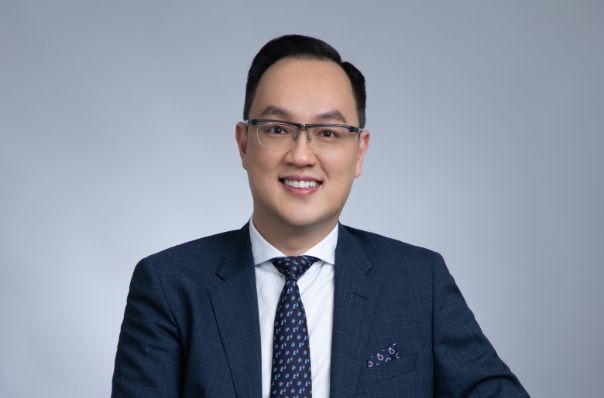
Amous Lee
The CEO and Partner of FMI Investment possesses over 24 years of extensive experience in international property investment. Throughout his 24-year career, he has been actively involved in project consultancy and marketing for multiple listed developers, successfully transacting and managing global properties valued at over USD 8 billion. In addition, he is a member of the Australian Institute of Quantity Surveyors (AIQS), as well as a member and former Secretary General of the Australian Institute of Building (AIB).
YOU MAY ALSO LIKE…