

 Search
Latest Blog
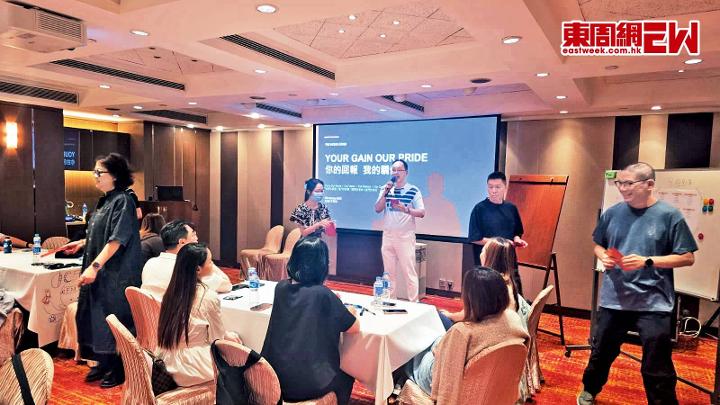
Over the past few months, apart from being busy with property handovers, I have also been tied up with organizing company training. While some people go on an Asian concert tour, I’ve been running an Asian training tour. What’s more, while most companies usually hire external trainers to take the lead, I believe external trainers may not truly understand our operations. In the end, I decided to take matters into my own hands and do it myself.
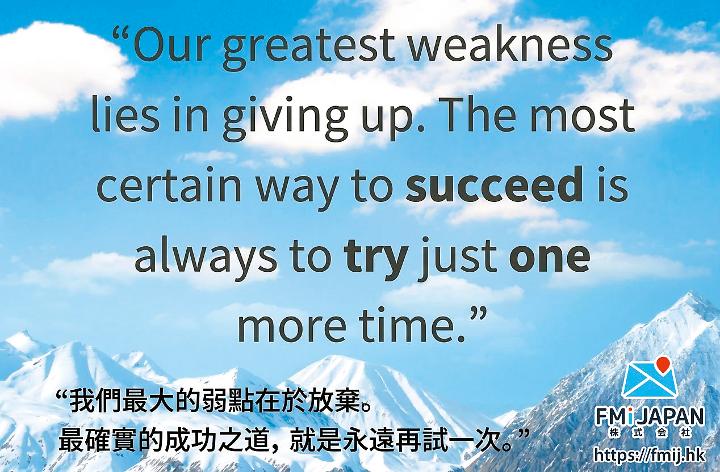
All my colleagues know that I have a habit of sharing my favorite golden quotes with everyone. Why do I do this? First, I personally love reading golden quotes. Sometimes, a simple sentence serves as self-reflection or even a form of caution and alertness. Second, I believe this way of communicating and encouraging others acts as a form of corporate training. In fact, various training programs ultimately boil down to the same old mindset. I divide my golden quotes into two main categories: one for our sales colleagues, and the other for our back-office team. Having worked in sales and served in management, I understand that the nature of these two roles is different, and the directions they need to think in are completely distinct.
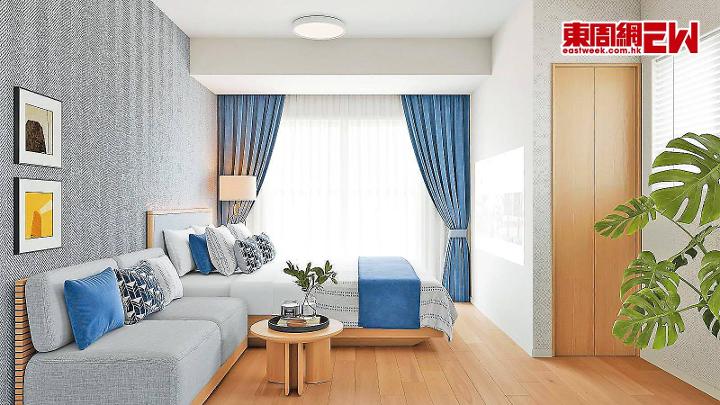
FMI’s fourth property project located right by Tsutenkaku has officially made its debut! Before we knew it, we have entered Osaka’s popular landmark area for the fourth time. Our first three projects received fantastic word-of-mouth and achieved stellar sales results. Coming in as the grand finale, this new project is unbeatable in terms of location because the entire building sits right at the foot of Tsutenkaku. The moment you step out of the building and look up, Tsutenkaku towers right before your eyes.
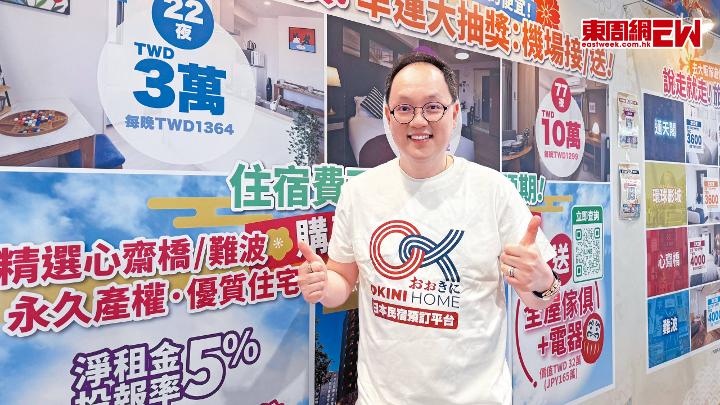
At the end of August, FMI accomplished a groundbreaking milestone by participating in major travel expos in both Taiwan and Singapore on the very same day. Our main focus was promoting OKINI, allowing more people to discover our meticulously crafted Japan minpaku (vacation rental) booking platform. To prepare for these two major expos, the Hong Kong OKINI home team and our Chief of HOMES colleagues in Osaka headed to Taiwan and Singapore simultaneously. With the support of our local branch teams, everyone worked together to successfully exceed our goals. The team felt a tremendous amount of pressure preparing for these two exhibitions, as we were essentially newcomers to travel expos, making manpower and experience significant challenges.
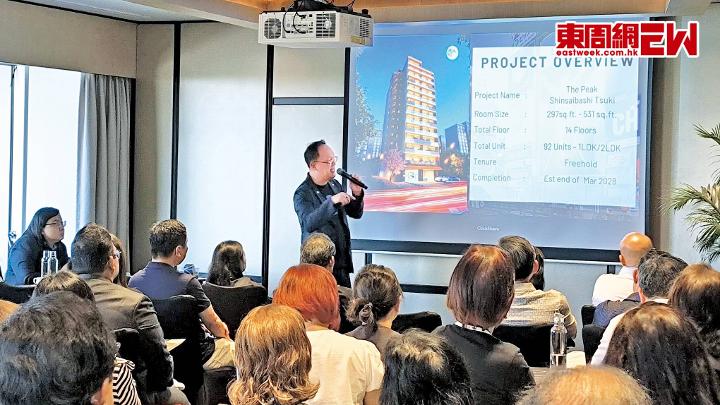
Recently, I returned to Singapore—my "home away from home"—to host a real estate seminar at Knight Frank Singapore, the company where I worked for ten years. On the day of the event, longtime seniors and comrades came out in full force to support me, including legendary figures in the industry. Seeing masters from various backgrounds gather to listen to my talk was both an honor and a source of immense pressure, as I was speaking in front of heavyweights and had to be extra careful not to make any mistakes. Most thrillingly, many of these seniors decided to invest in FMI properties after the seminar, becoming my clients and offering high praise for our work. Their tangible support was both an encouragement and a profound honor.
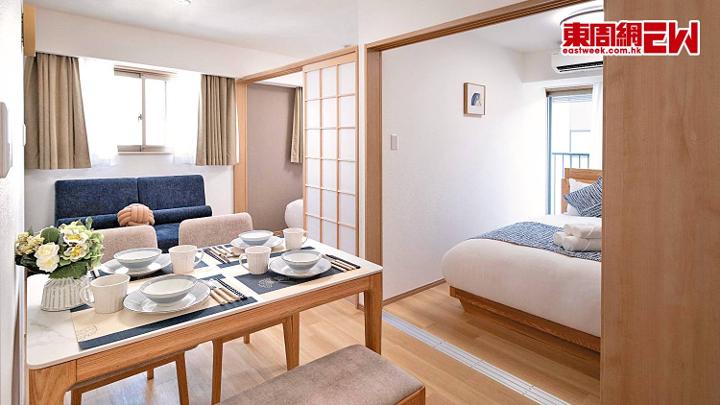
This year has been one of full-speed advancement for OKINI Home. In just over half a year, we have participated in major travel exhibitions in Hong Kong, Seoul, Taiwan, and Singapore. Our goal is simple: to introduce OKINI and the comprehensive management services of Chief of Homes (COH) to a wider audience of travelers.